What now for the forest industry and primary sector in NZ?
The fallout from the past two weeks as China productivity stalls on the back of the Coronavirus outbreak places huge urgency on addressing vital questions on how the forest industry and primary sector shapes to move forward with a long-term strategic goal that tempers reliance on one single customer destination.
The current situation isn’t going to get better in a hurry. In fact it’s surprising it’s hardly registered on anyone’s radar. The NZ dollar hasn’t dropped and neither has the stock market, and there has hardly been mention of what it could do to economic growth apart from Simon Bridges claiming that in nine months’ time, if elected, National has a first term goal of 3% growth. Um…..really?
Logs continue to get produced and despite many crews stopping and others reducing output, the reality of the end user suddenly stopping is yet to fully hit home. If we are currently at 7 million tonnes of port inventory in China with payments pending for some 20 plus odd ships loading, on their way, or waiting to discharge, then what’s the end game here?
Even if China manages to get construction and sawmills up and running in the next week and resume normal offtakes, there’s going to be an 8 million tonne plus inventory tail to deplete over winter until we get back to what is normally a heightened level of inventory at around 4 million tonnes.
Damaged European spruce remains abundant and available in huge quantities for the foreseeable future. Wood from Uruguay has started moving and Russian wood is not far from coming back on stream.
Figuratively speaking India and Korea take the equivalent of a couple of tandem trailer loads compared to China’s road trains and by the end of this month those alternative markets are buggered, so everyone’s going to be looking at each other asking what’s next?
In the past two weeks following the Coronavirus blowout it is also rumoured that some overseas companies with forest ownership here have tried to take advantage of the situation and reassign supply control balance by offering to buy supplier logs at a premium for February in return for ongoing mid-term supply. Is this acceptable for NZ and the industry to be vulnerable to this sort of play?
Is it also acceptable that prominent local forest management companies and individuals with very little to no skin in the game reportedly help facilitate and promote this type of activity?
Questions that need to be answered:
- 1. How do we develop and support local processing of logs and produce products that have value here domestically and overseas where the margin gains sit equitably with the forest owner and processor as opposed to the end user or retailer?
- 2. How do we limit our exposure globally to one customer and is there a better way to sell our export product especially if it has to be in the form of raw logs?
- 3. What legislative changes can be implemented to ensure that the nett returns from either overseas or NZ owned resources benefit NZ and its participants as well as contribute to economic growth and stability.
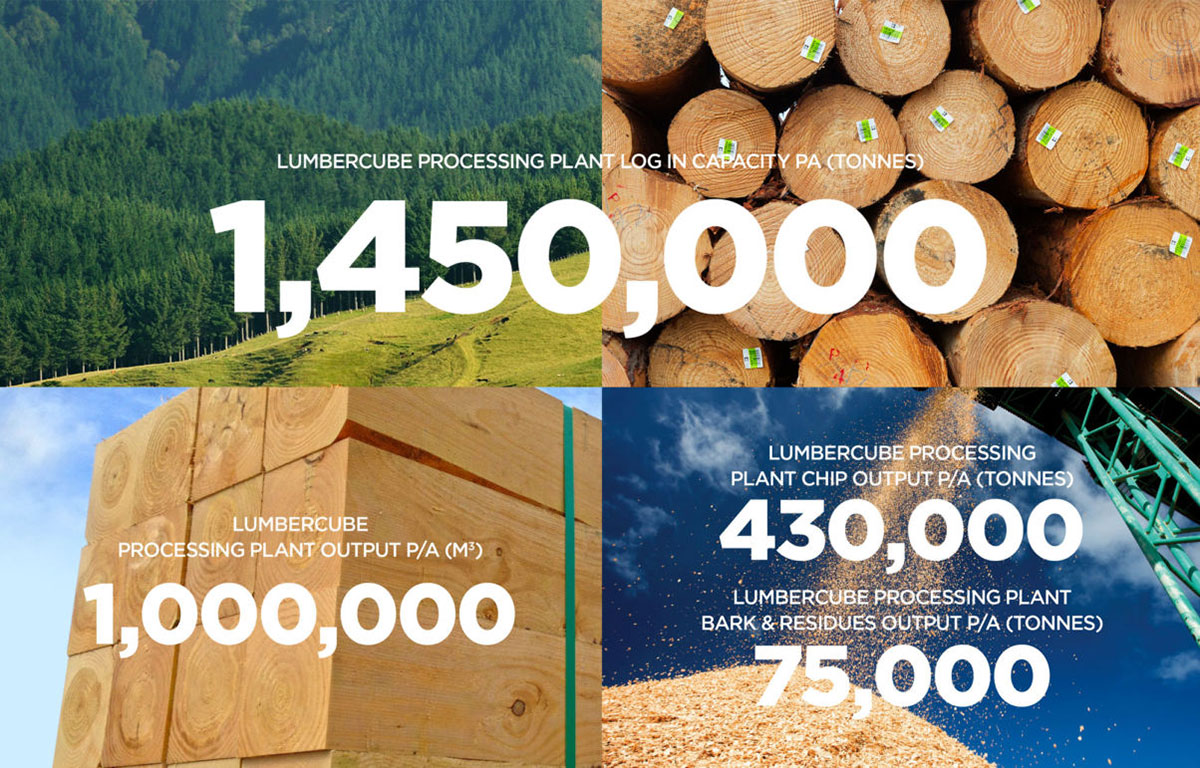
- 4. Can we have the RMA and compliance requirements support rather than diminish new and existing activity? (Remember Lumbercube? It started operating its prototype mill on the old Tachikawa site in Rotorua on September 2015 then had more than 3400 noise complaints received by Rotorua Lakes Council when it started nightshift in early 2016. The company then spent almost $3 million on noise reduction, got played in a single market that closed suddenly with the loss of about 80 jobs on April 30, 2016.)
Planting one billion trees is pointless without addressing these questions and the Provincial Growth Fund then needs to allocate funding in a way that will sustainably serve the regions and its communities for years to come. Any Government that comes to power has to have a unified approach to this and commit to maintaining momentum.
Red Stag chief executive Marty Verry has already climbed into the government for inaction on its 2017 election manifesto promise, where the party said it would restore and build on ex-Labour Forestry Minister Jim Anderton’s requirement for all government-funded project proposals for new buildings up to four storeys high to require a build-in-wood option at the initial concept and request-for-proposals stage.
Because of advances in engineering and wood processing technologies, Labour said it would also increase the four-storey requirement to 10 storeys. Nothing’s happened however.
Fair question from Verry and it was supported in an open letter signed by 56 major forestry and wood processing companies in New Zealand representing 25,000 employees.
There is a huge amount of potential and possibilities, but we need strategy leadership to develop and support the likes of more Red Stags, more added value concepts and those with the vision to pave a different and diverse path, because in the next few months we would be completely stuffed without them, let alone in the longer term.